December 8
This region is peppered with waterfalls. We visited three of them today.
The sun returned as we left Refuge Tinquilco and pottered down to Ojos de Caburgua, some waterfalls near the head of Lago Caburgua. An eruption blocked this southern end of the valley thousands of years ago, drowning it. Waters from the resultant lake now flow out through porous rocks and subterranean streams, reappearing as the Ojos de Caburgua, three waterfalls that plunge from the forest into a deep pool of clear water.
We joined the throngs on the walks around here, before lunching at a picnic bench.
The afternoon saw us divert some way up some gravel tracks to reach two more falls.
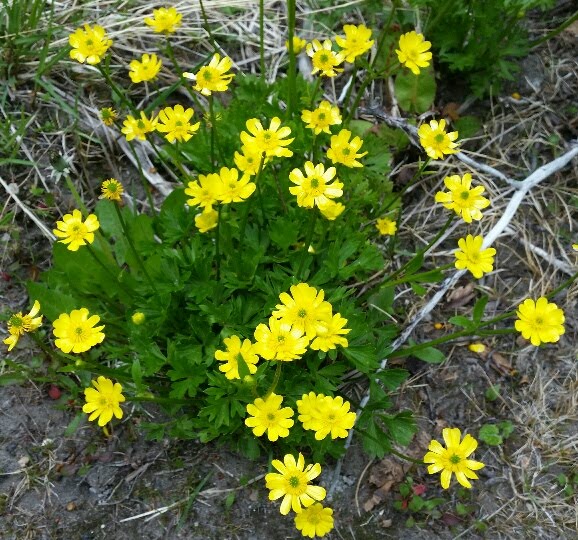
Firstly, Salto La China, which plunges about 75 metres before crashing onto rocks and spraying any nearby onlookers - in this case a plump family who seemed to be enjoying a 'wet t-shirt' contest. A flower resembling Touch-me-Not lined the short path to the falls, along with a ubiquitous variety of bright red Waterfall Plant.
Nearby, Salto El Leon crashed down for about 90 metres onto some rocks before spraying uncontrollably across the valley and down another small precipice to flow on as a small river.
Hostal La Tetera, back in Pucón, was full, so we went upmarket to Hostal Geronimo. It's a further block back from the main street, so hopefully the barking dogs we heard whilst staying at La Tetera will be a little more distant tonight.
We have a fine view of a smoking volcano - Volcán Villarrica - from our room and balcony.
Today's pictures:
Patricio outside Refuge Tinquilco
Looking out over Lago Tinquilco
Ojos de Caburgua waterfalls
Salto La China waterfall
Salto El Leon waterfall
The view from our balcony
Teatime outside Hostal Geronimo
The main purpose of this blog is to keep in touch with friends and family, and maybe entertain others with common interests, particularly in relation to the outdoors. We hope you enjoy it, and your comments are valued....
Sue and Martin in Mallorca 2019
On the Archduke's Path in Mallorca
Wednesday, 9 December 2015
Refuge Tinquilco and Cerro San Sebastian
December 7
Patricio had always wanted breakfast to be at 9.30, and so it was. There was no hurry though, as the cloud was down. It was expected to clear later. All very relaxed and in the true style of being on holiday.
By 10.45 Sue and I were on our way to climb the highest nearby peak, Cerro San Sebastian, 1905 metres, and David and Anne had set off on the Laguna El Toro circuit that we walked yesterday.
The cloud was very lazy. It didn't dissipate. We ascended 1100 metres in beautiful surroundings without seeing very much beyond a few metres. The flowers were nice. So were the beetles. Sue wasn't so keen on the large hairy Araňas pollos, which look like giant tarantulas and stand on their hind legs with a menacing air. They are quite cuddly really.
Lunch at about 2 pm was on a sharp wooded ridge before the final steep ascent towards the summit. The hills around here seem to have a habit of starting with nicely graded paths and finishing with something of a thrutch.
This one finished with a sharp rocky ridge that finished me at 1750 metres. Sue got up another 50 metres before turning back. A young local Chilean couple returning from the summit told us it was just another 500 metres away, and they kindly offered to accompany us. But whilst the top was just about clear of cloud, they said there was no real view, so we decided to continue on down.
Some views did at last appear, but the summit remained in cloud until 5 pm.
An uneventful descent saw us back at the refuge at 6 pm after a 19 km outing, with plenty of time for R & R before another excellent meal from Patricio in the company of Anne and David, and Cecilia and Jan, a French couple who live in Sydney and are on a long trip.
We later debated the difference between a 'traveller' and a 'tourist'. Does it matter?
Today's pictures:
Flowers and a 4 inch diameter spider (4)
Sue nears the summit
A view from the descent
Dinner with Patricio
Patricio had always wanted breakfast to be at 9.30, and so it was. There was no hurry though, as the cloud was down. It was expected to clear later. All very relaxed and in the true style of being on holiday.
By 10.45 Sue and I were on our way to climb the highest nearby peak, Cerro San Sebastian, 1905 metres, and David and Anne had set off on the Laguna El Toro circuit that we walked yesterday.
The cloud was very lazy. It didn't dissipate. We ascended 1100 metres in beautiful surroundings without seeing very much beyond a few metres. The flowers were nice. So were the beetles. Sue wasn't so keen on the large hairy Araňas pollos, which look like giant tarantulas and stand on their hind legs with a menacing air. They are quite cuddly really.
Lunch at about 2 pm was on a sharp wooded ridge before the final steep ascent towards the summit. The hills around here seem to have a habit of starting with nicely graded paths and finishing with something of a thrutch.
This one finished with a sharp rocky ridge that finished me at 1750 metres. Sue got up another 50 metres before turning back. A young local Chilean couple returning from the summit told us it was just another 500 metres away, and they kindly offered to accompany us. But whilst the top was just about clear of cloud, they said there was no real view, so we decided to continue on down.
Some views did at last appear, but the summit remained in cloud until 5 pm.
An uneventful descent saw us back at the refuge at 6 pm after a 19 km outing, with plenty of time for R & R before another excellent meal from Patricio in the company of Anne and David, and Cecilia and Jan, a French couple who live in Sydney and are on a long trip.
We later debated the difference between a 'traveller' and a 'tourist'. Does it matter?
Today's pictures:
Flowers and a 4 inch diameter spider (4)
Sue nears the summit
A view from the descent
Dinner with Patricio
Tuesday, 8 December 2015
Forest, Lakes and Mountains
December 6
Refuge Tinquilco (www.tinquilco.cl), nestled comfortably near Lago Tinquilco, had been recommended by Sharon and Rich. We headed up there - 30 km from Pucón, much on gravel, and the last 2 km from the Park entrance on foot as Sparky's ground clearance is questionable.
Patricio welcomed us with a pot of the best coffee we had tasted for some time. We seem to have adopted Chilean time. Breakfast at 9, elevenses at 12.30, lunch at 3 pm, dinner at 9.30 pm. You can only resist for so long.
By around 1 pm we had set off on today's 22 km ramble with about 900 metres ascent. It took us through wonderful forest, lakes and mountain scenery in the Huerquehue National Park. There were plenty of people around. For good reason, this is a minor classic.
Chico, Toro and Verde are the names of some of the lakes. There were others, small jewels in the forest.
A Magellan Woodpecker completely ignored us. Glossy beetles were trapped and photographed. The lakes were surprisingly duckless. Monkey puzzle trees draped in old men's beards rose majestically above us.
At one point we met Thomas, who had shot off to an unknown destination immediately after breakfast at Hostal La Tetera. We chatted for some time before bidding our final farewells.
Mirador Renahue was the furthest point reached. Here at over 1400 metres the mountain views were at their best, and we enjoyed a long look down a deep canyon to distant Lago Caburgua.
The loop walk continued along a path that was officially shut due to fallen trees. We managed to clamber over them, hampered only by a severe bout of cramp on my part.
A short diversion on the final descent took us to Cascada Trufulco, a long, thin waterfall that didn't photograph very well in the low light that had arrived with some thick cloud late in the day.
Back at the refuge by 7.30, we discovered that our 'Presidential Suite' had a low water pressure problem. Never mind, after a quick wash we were soon enjoying our usual cuppa, slightly envious of Anne and David, a couple from near Sheffield who had lived near Puerto Montt from 1988 to 1992 while David built a salmon farm, as they tucked in to their Pisco Sours, skilfully produced by Patricio, who is also authoring a cookbook.
We had passed a very happy looking pig on the way to the refuge. She hadn't noticed that one of her relatives had been snaffled by Patricio and converted into the best braised pork ribs you could imagine. Served on a bed of deliciously lubricated mash after a very tasty salad.
Patricio had earlier mentioned that he had recently visited Europe. It took a while to drag some of the facts behind that trip out of him. But then they flowed. From his early days as a leader of student uprisings in the Pinochet era, Patricio graduated to film making and had been invited to Geneva to attend a festival in which his award winning 90 minute documentary, 'The Judge and the General', on General Pinochet was a 'headline act'. The film has still not been shown in Chile, where there is still quite a lot of pro-Pinochet feeling.
Today's pictures:
Refuge Tinquilco
A ubiquitous red flower of the forest
Thomas and Sue
The view down to Lago Tinquilco from one of several miradors
Sue in the forest
Monkey puzzle trees
A view from Mirador Renahue
Typical lakeside vistas (2)
Refuge Tinquilco (www.tinquilco.cl), nestled comfortably near Lago Tinquilco, had been recommended by Sharon and Rich. We headed up there - 30 km from Pucón, much on gravel, and the last 2 km from the Park entrance on foot as Sparky's ground clearance is questionable.
Patricio welcomed us with a pot of the best coffee we had tasted for some time. We seem to have adopted Chilean time. Breakfast at 9, elevenses at 12.30, lunch at 3 pm, dinner at 9.30 pm. You can only resist for so long.
By around 1 pm we had set off on today's 22 km ramble with about 900 metres ascent. It took us through wonderful forest, lakes and mountain scenery in the Huerquehue National Park. There were plenty of people around. For good reason, this is a minor classic.
Chico, Toro and Verde are the names of some of the lakes. There were others, small jewels in the forest.
A Magellan Woodpecker completely ignored us. Glossy beetles were trapped and photographed. The lakes were surprisingly duckless. Monkey puzzle trees draped in old men's beards rose majestically above us.
At one point we met Thomas, who had shot off to an unknown destination immediately after breakfast at Hostal La Tetera. We chatted for some time before bidding our final farewells.
Mirador Renahue was the furthest point reached. Here at over 1400 metres the mountain views were at their best, and we enjoyed a long look down a deep canyon to distant Lago Caburgua.
The loop walk continued along a path that was officially shut due to fallen trees. We managed to clamber over them, hampered only by a severe bout of cramp on my part.
A short diversion on the final descent took us to Cascada Trufulco, a long, thin waterfall that didn't photograph very well in the low light that had arrived with some thick cloud late in the day.
Back at the refuge by 7.30, we discovered that our 'Presidential Suite' had a low water pressure problem. Never mind, after a quick wash we were soon enjoying our usual cuppa, slightly envious of Anne and David, a couple from near Sheffield who had lived near Puerto Montt from 1988 to 1992 while David built a salmon farm, as they tucked in to their Pisco Sours, skilfully produced by Patricio, who is also authoring a cookbook.
We had passed a very happy looking pig on the way to the refuge. She hadn't noticed that one of her relatives had been snaffled by Patricio and converted into the best braised pork ribs you could imagine. Served on a bed of deliciously lubricated mash after a very tasty salad.
Patricio had earlier mentioned that he had recently visited Europe. It took a while to drag some of the facts behind that trip out of him. But then they flowed. From his early days as a leader of student uprisings in the Pinochet era, Patricio graduated to film making and had been invited to Geneva to attend a festival in which his award winning 90 minute documentary, 'The Judge and the General', on General Pinochet was a 'headline act'. The film has still not been shown in Chile, where there is still quite a lot of pro-Pinochet feeling.
Today's pictures:
Refuge Tinquilco
A ubiquitous red flower of the forest
Thomas and Sue
The view down to Lago Tinquilco from one of several miradors
Sue in the forest
Monkey puzzle trees
A view from Mirador Renahue
Typical lakeside vistas (2)
Sunday, 6 December 2015
Pucón
Here's another image of Pucón's too hot for bare feet beach.
Just to let you know, we are unlikely to be in touch for a few days due to another 'back country' trip.
Bye for now...
To Pucón
Saturday 5 December
Today began with a leisurely departure and a 200 mile drive, featuring the Pan American Highway, a two lane motorway that looks a bit like the original M1 between London and Birmingham, for those that can remember.
That motorway has changed a lot from the days when, as a student stunt, some of my contemporaries painted a pedestrian crossing across the motorway near Watford Gap. That sort of prank could still be played, in complete safety, on this quiet highway. Once you leave the highway, unless you are heading to one or other of a handful of sizeable towns, you are on dirt/gravel roads.
As the motorway, a toll road, is the only surfaced road heading north/south, none of the usual restrictions apply, so cyclists and walkers frequently occupy the hard shoulder, if not the road.
But on the motorway we might have been virtually anywhere, with rolling hills, woodland and pasture, but little by way of habitation. Rural mid-Wales comes to mind.
Even the service station was modelled on the central European style of petrol station with attached café, where we enjoyed coffees and croissants.
But the Black-faced Ibises and the Southern Lapwings in the fields would give away the location to any ornithologists.
It was a blue sky day apart from a little fog over Lago Puyehue. Very hot by the time we reached Pucón at around 2 pm.
Grietzen welcomed us into Hostal La Tetera, another of the 'Backpackers Chile' recommended hostels. We have a 'cosy' (ie small) double room with an en suite bath. Perfect.
Grietzen recommended a 5 km stroll around Pucón, which we ambled around. Most of today's pictures are from that walk, apart from the first two, taken from our lunch bench in Villarrica, in front of a rare tractor and our view of its eponymous volcano.
Volcán Villarrica features on a few of the images. It erupted in March and has only just reopened for climbing. Sue fancies going up, but the £85 it would cost would be wasted on me.
It has been hot and dry for some time. In fact we've not seen any proper rain since we entered Chile over three weeks ago. And this in a place where everyone asserts the weather forecast as being 'unpredictable'! Just like the English Lake District, with whose residents we now sympathise with regard to their current flooding problems. All this fine weather makes it a bit hazy, so the 250 volcanoes that Sue says can be seen from Volcán Villarrica may not all be visible.
At the start of our walk around the town we met Thomas, last seen in Aguas Calientes. We hadn't expected to see him ever again, but another dinner appointment was fixed. Thomas is struggling with cash machines that limit him to the equivalent of £150 per transaction and charge him £5 for the privilege. It seems that unlike in the UK, Pesos are hard to get hold of in Hamburg.
The 'sandy' beach was enticing. We took off our shoes and socks, intending a paddle. "Ouch, that's not sand, it's ash. Hot ash." So I gave up and took a promenade route but Sue persisted, going down to the lakeside before taking off her shoes and paddling the length of the beach. "It would be a cold swim" she reported.
Later, the cemetery provided good views over the town, from a tall figure of Christ on a high promontory.
Dinner with Thomas at Trawén was very tasty but, in this place that has been likened to New Zealand's Queenstown, rather pricey.
Today began with a leisurely departure and a 200 mile drive, featuring the Pan American Highway, a two lane motorway that looks a bit like the original M1 between London and Birmingham, for those that can remember.
That motorway has changed a lot from the days when, as a student stunt, some of my contemporaries painted a pedestrian crossing across the motorway near Watford Gap. That sort of prank could still be played, in complete safety, on this quiet highway. Once you leave the highway, unless you are heading to one or other of a handful of sizeable towns, you are on dirt/gravel roads.
As the motorway, a toll road, is the only surfaced road heading north/south, none of the usual restrictions apply, so cyclists and walkers frequently occupy the hard shoulder, if not the road.
But on the motorway we might have been virtually anywhere, with rolling hills, woodland and pasture, but little by way of habitation. Rural mid-Wales comes to mind.
Even the service station was modelled on the central European style of petrol station with attached café, where we enjoyed coffees and croissants.
But the Black-faced Ibises and the Southern Lapwings in the fields would give away the location to any ornithologists.
It was a blue sky day apart from a little fog over Lago Puyehue. Very hot by the time we reached Pucón at around 2 pm.
Grietzen welcomed us into Hostal La Tetera, another of the 'Backpackers Chile' recommended hostels. We have a 'cosy' (ie small) double room with an en suite bath. Perfect.
Grietzen recommended a 5 km stroll around Pucón, which we ambled around. Most of today's pictures are from that walk, apart from the first two, taken from our lunch bench in Villarrica, in front of a rare tractor and our view of its eponymous volcano.
Volcán Villarrica features on a few of the images. It erupted in March and has only just reopened for climbing. Sue fancies going up, but the £85 it would cost would be wasted on me.
It has been hot and dry for some time. In fact we've not seen any proper rain since we entered Chile over three weeks ago. And this in a place where everyone asserts the weather forecast as being 'unpredictable'! Just like the English Lake District, with whose residents we now sympathise with regard to their current flooding problems. All this fine weather makes it a bit hazy, so the 250 volcanoes that Sue says can be seen from Volcán Villarrica may not all be visible.
At the start of our walk around the town we met Thomas, last seen in Aguas Calientes. We hadn't expected to see him ever again, but another dinner appointment was fixed. Thomas is struggling with cash machines that limit him to the equivalent of £150 per transaction and charge him £5 for the privilege. It seems that unlike in the UK, Pesos are hard to get hold of in Hamburg.
The 'sandy' beach was enticing. We took off our shoes and socks, intending a paddle. "Ouch, that's not sand, it's ash. Hot ash." So I gave up and took a promenade route but Sue persisted, going down to the lakeside before taking off her shoes and paddling the length of the beach. "It would be a cold swim" she reported.
Later, the cemetery provided good views over the town, from a tall figure of Christ on a high promontory.
Dinner with Thomas at Trawén was very tasty but, in this place that has been likened to New Zealand's Queenstown, rather pricey.
Rest in peace, Laurie, we were thinking of you today.
Saturday, 5 December 2015
A Walk to Lago Paraiso
December 4
This was intended to be a short walk on a sunny day before an afternoon of relaxation in the hot springs at Aguas Calientes.
Fuelled by muesli, and after an 11 km drive up a dirt road, we parked on the wrong side of a deep drainage ditch (no damage done) and set off down the track towards the lake.
The forest was lovely but the views were limited. A Magellan Woodpecker flitted above us in the trees. The sometimes muddy path led past rampant bamboo to a massive log bridge with sunbathing lizards.
We decided, after a couple of kilometres, to take a route marked with black dashes on the map - an unsigned path. This led to an unexpected meadow where the cows looked as surprised as we felt.
We were expecting to reach a track linking Lago Paraiso with Lago El Palmar. But we reached a river. Despite the fast flow, we got across with the aid of a tree trunk. We emerged near a farmstead, but there was no sign of the track that we had been expecting. But we soon discovered a narrow path leading up to Lago Paraiso from a roadhead at Lago El Palmar. There was no track.
This path was the best bit of today's walk. Beautifully constructed through deep forest passing under immense trees - Mañío, with bark like that of plane trees, and even taller Coihue trees, to name just two of them.
The area has an indigenous Mapuche-Huilliche community, with small, remote farming hamlets in the Siempteverde ("Alwaysgreen") forest. But it wasn't all green, thanks to stands of bright red Fire Bushes. There were lots of small wooden bridges to guide us across side ravines. Water boiled down the torrent we had crossed earlier.
Eventually we reached a closed cabin and some picnic tables beside Lago Paraiso, our objective. There were fine views across the lake to the 1500 metre summit of Cerro Feo. The walk up there would be a good one.
We thought that from here it would be an easy walk back to the car. Wrong. First, another river crossing. Sue experimented with a steep log that had a few steps cut into it. That scared her and she nearly fell in. Eventually we found a way across via a combination of fallen trees.
A very rough path then led over a col and down past large trees with what looked like Liliputian forests at their base, to the point where we had left it earlier. We met five people on their way up to the lake, and two more near the start of the walk. Otherwise nobody.
We'd been out for about 5 hours and covered 14 km with 400 metres ascent.
Lunch had been 'ship's biscuits and peanuts' so we were pleased to tuck into some cans of sardines when we returned to the cabin at 3.30 and Sue had been for a chat with a CONAF lad we saw yesterday, to fill him in with some 'route advice' as he has to give advice to walkers, and he hasn't walked today's route himself.
(Can you tell, the unplanned 'cabin' accommodation and lack of a shop has led to minor catering inadequacies.)
Aguas Calientes means 'hot waters'. Our cabin occupancy allows us free entry to those hot waters, and this afternoon we took full advantage. We made a better job of cooking ourselves than cooking our lunch!
Duly poached (medium rare) we returned to domestics (hot water is good for filthy clothing - volcano dust gets everywhere) and a pasta meal from our camping box, rather than sit in an otherwise empty restaurant and receive our food in a rather odd order - yesterday my starter and main course arrived together and Sue had to wait until I'd finished them before she got her meal. She did eat a fair amount of my starter though!
Some advance planning was then achieved and we (ie Sue) sorted accommodation for the next three nights, which is a slight relief as the next three days are apparently a holiday weekend.
Today's pictures:
Starting down the forest path
The first and most impressive log bridge with sunbathing lizards
Flowers of an ivy like tree creeper
Sue, smugly dry after walking across the log above a torrent - I shuffled across and got a soggy bottom and wet feet
Lago Paraiso and Cerro Feo
The log that freaked Sue, before she turned back
Our cabin
The outdoor pool at Aguas Calientes (can you spot Sue?)
This was intended to be a short walk on a sunny day before an afternoon of relaxation in the hot springs at Aguas Calientes.
Fuelled by muesli, and after an 11 km drive up a dirt road, we parked on the wrong side of a deep drainage ditch (no damage done) and set off down the track towards the lake.
The forest was lovely but the views were limited. A Magellan Woodpecker flitted above us in the trees. The sometimes muddy path led past rampant bamboo to a massive log bridge with sunbathing lizards.
We decided, after a couple of kilometres, to take a route marked with black dashes on the map - an unsigned path. This led to an unexpected meadow where the cows looked as surprised as we felt.
We were expecting to reach a track linking Lago Paraiso with Lago El Palmar. But we reached a river. Despite the fast flow, we got across with the aid of a tree trunk. We emerged near a farmstead, but there was no sign of the track that we had been expecting. But we soon discovered a narrow path leading up to Lago Paraiso from a roadhead at Lago El Palmar. There was no track.
This path was the best bit of today's walk. Beautifully constructed through deep forest passing under immense trees - Mañío, with bark like that of plane trees, and even taller Coihue trees, to name just two of them.
The area has an indigenous Mapuche-Huilliche community, with small, remote farming hamlets in the Siempteverde ("Alwaysgreen") forest. But it wasn't all green, thanks to stands of bright red Fire Bushes. There were lots of small wooden bridges to guide us across side ravines. Water boiled down the torrent we had crossed earlier.
Eventually we reached a closed cabin and some picnic tables beside Lago Paraiso, our objective. There were fine views across the lake to the 1500 metre summit of Cerro Feo. The walk up there would be a good one.
We thought that from here it would be an easy walk back to the car. Wrong. First, another river crossing. Sue experimented with a steep log that had a few steps cut into it. That scared her and she nearly fell in. Eventually we found a way across via a combination of fallen trees.
A very rough path then led over a col and down past large trees with what looked like Liliputian forests at their base, to the point where we had left it earlier. We met five people on their way up to the lake, and two more near the start of the walk. Otherwise nobody.
We'd been out for about 5 hours and covered 14 km with 400 metres ascent.
Lunch had been 'ship's biscuits and peanuts' so we were pleased to tuck into some cans of sardines when we returned to the cabin at 3.30 and Sue had been for a chat with a CONAF lad we saw yesterday, to fill him in with some 'route advice' as he has to give advice to walkers, and he hasn't walked today's route himself.
(Can you tell, the unplanned 'cabin' accommodation and lack of a shop has led to minor catering inadequacies.)
Aguas Calientes means 'hot waters'. Our cabin occupancy allows us free entry to those hot waters, and this afternoon we took full advantage. We made a better job of cooking ourselves than cooking our lunch!
Duly poached (medium rare) we returned to domestics (hot water is good for filthy clothing - volcano dust gets everywhere) and a pasta meal from our camping box, rather than sit in an otherwise empty restaurant and receive our food in a rather odd order - yesterday my starter and main course arrived together and Sue had to wait until I'd finished them before she got her meal. She did eat a fair amount of my starter though!
Some advance planning was then achieved and we (ie Sue) sorted accommodation for the next three nights, which is a slight relief as the next three days are apparently a holiday weekend.
Today's pictures:
Starting down the forest path
The first and most impressive log bridge with sunbathing lizards
Flowers of an ivy like tree creeper
Sue, smugly dry after walking across the log above a torrent - I shuffled across and got a soggy bottom and wet feet
Lago Paraiso and Cerro Feo
The log that freaked Sue, before she turned back
Our cabin
The outdoor pool at Aguas Calientes (can you spot Sue?)
Friday, 4 December 2015
Volcán Puyehue
December 3
A lie in was in order as we awoke to find ourselves in a cloud.
However, Volcán Puyehue was beckoning us through the mist, so after breakfast in bed (we are allowed to cook inside our tent here, and were even encouraged by Santiago, the park warden, to gather wood and light a fire) we ambled off up the hill well before 9 am.
Volcanoes are steep by nature. This one last erupted in 2011, so the ash has bedded down a bit, and the upper slopes were still clad in snow. Steep snow. Unfortunately the ash created a layer impervious to water, so nine out of ten trees in a wide area below the refuge have died. The walking routes were also largely destroyed, so the map we bought from Armin is rather useful. Both Ray and Shohan had tried and failed to get a map of the area, possibly because they tried before it was published - it turns out to be hot off the press, so they spent some time photographing ours!
I'm sure it was perfectly safe as it was only icy in places, but the gradient of the snow on the upper slopes made me wish I had an ice axe. We reached a rock band at 2100 metres where I decided to stay put whilst Sue went to the 2250 metre summit and peered into the snow filled crater.
From where I was I could see evidence of volcanic activity, but the black rock from the 2011 eruption wasn't quite visible.
We were back at camp in time for a very civilised lunch at a picnic table. There were no new arrivals, and only Shohan remained from last night's crew. He had lit a fire in the refuge and was going to clean it before going down.
We went down. Steeply. 1000 metres. At first, where a lot of the trees have died, there was a good selection of wild flowers - celandines and dog orchids being the most common, thanks to there being a fair amount of light. Further down, where fewer trees had died, there weren't many flowers that were able to flourish in the low light beneath the leaf canopy.
Lapwings and ibis guided us back to El Caulle, where we signed out and were given tea by Santiago. We needed it. We had run out of 'plan' and pored over the guidebook for a while.
A lie in was in order as we awoke to find ourselves in a cloud.
However, Volcán Puyehue was beckoning us through the mist, so after breakfast in bed (we are allowed to cook inside our tent here, and were even encouraged by Santiago, the park warden, to gather wood and light a fire) we ambled off up the hill well before 9 am.
Volcanoes are steep by nature. This one last erupted in 2011, so the ash has bedded down a bit, and the upper slopes were still clad in snow. Steep snow. Unfortunately the ash created a layer impervious to water, so nine out of ten trees in a wide area below the refuge have died. The walking routes were also largely destroyed, so the map we bought from Armin is rather useful. Both Ray and Shohan had tried and failed to get a map of the area, possibly because they tried before it was published - it turns out to be hot off the press, so they spent some time photographing ours!
I'm sure it was perfectly safe as it was only icy in places, but the gradient of the snow on the upper slopes made me wish I had an ice axe. We reached a rock band at 2100 metres where I decided to stay put whilst Sue went to the 2250 metre summit and peered into the snow filled crater.
From where I was I could see evidence of volcanic activity, but the black rock from the 2011 eruption wasn't quite visible.
We were back at camp in time for a very civilised lunch at a picnic table. There were no new arrivals, and only Shohan remained from last night's crew. He had lit a fire in the refuge and was going to clean it before going down.
We went down. Steeply. 1000 metres. At first, where a lot of the trees have died, there was a good selection of wild flowers - celandines and dog orchids being the most common, thanks to there being a fair amount of light. Further down, where fewer trees had died, there weren't many flowers that were able to flourish in the low light beneath the leaf canopy.
Lapwings and ibis guided us back to El Caulle, where we signed out and were given tea by Santiago. We needed it. We had run out of 'plan' and pored over the guidebook for a while.
_____________________________________
Meanwhile, Sue has compiled her own take on today, which I've decided to include in full below, despite the duplications, as I know certain readers will appreciate that.
Here we go:
At 8.45am, we set off from our 1400m camp with just my rucksack to climb to the crater of Volcán Puyehue at 2250m. Cloud swirled but it was quite bright. Initially through clumps of grass, we soon got onto fairly solid volcanic slopes, where the route was marked with cairns or short stakes. Although we broke through the cloud, there was another level of high cloud above, so everything was a bit monotone. A cool breeze blew and we needed jackets.
It was a slog. The slope steepened. From the rocky gravel, we moved onto snow. It was soft enough to make steps but it was hard work. At one point there was a view across the slopes to the area of the eruption in 2011, all very grey and partly covered with old snow.
Martin decided not to continue and waited in a sheltered spot at 2100m, whilst I continued, up a section mainly clear of snow to gain a ridge. Here, I turned left on a clear path to reach the crater at 2250m. The bottom was covered in snow, but it was an impressive sight, with some cloud below me. Later, Santiago told us about a Red Bull-sponsored event, where a group of people were dropped by helicopter into the crater. Flares were set off to simulate a volcanic explosion, and they had to climb out of the crater using ice axes. Once on the rim they could ski down to the refuge. Mad!
I didn't stay long as Martin was waiting below, so once I'd put on gaiters, I retraced steps and was soon back. We then had to negotiate the snow slopes which I enjoyed yomping down, but it was a bit too steep for Martin and he took the slope carefully. We re-entered the cloud before reaching the refuge again (needed the marker posts) at 12.30pm. We could have taken the traversing path part way down, but neither of us fancied it and there was probably insufficient time anyway.
Despite being in the cloud, it was bright and we had lunch on one of the picnic benches, brewing a welcome cup of tea. Rolls, yesterday's cheese and a tin of sardines fuelled the imminent descent.
The tent was struck and we set off back down at 1.30pm. We had noted that quite a lot of the trees were dead, both around the refuge and further down, and Santiago confirmed that it was as a result of the 2011 eruption.
Initially in cloud in the trees, we eventually dropped below it to emerge into the green pasture where the bull, cows and calves were contentedly grazing. The cloud was clearing well, but not sufficiently to clear our volcano.
Where ibises had been yesterday, lapwings were today. As we approached El Caulle restaurant, we laughed to see the tiny Yorkshire terrier chasing a cow across a field. He really is very feisty for a small dog!
Santiago enjoyed a chat (we were down by 3.45pm) uand made us a (free) cup of tea.
Showers were welcome after no facilities last night, and we had a meal at the restaurant, the only two dining. Big salads, chicken and lasagne, with cold beers. Through the window, we could see a blackbird with a mouthful of wriggling worms, ready to feed its young."
"We woke in the tent around 8am, to high cloud that soon descended to the level of camp. Had tea and muesli in bed, as there are no restrictions on cooking, or even lighting fires here. It had been encouraged by Santiago, where we signed in.
At 8.45am, we set off from our 1400m camp with just my rucksack to climb to the crater of Volcán Puyehue at 2250m. Cloud swirled but it was quite bright. Initially through clumps of grass, we soon got onto fairly solid volcanic slopes, where the route was marked with cairns or short stakes. Although we broke through the cloud, there was another level of high cloud above, so everything was a bit monotone. A cool breeze blew and we needed jackets.
It was a slog. The slope steepened. From the rocky gravel, we moved onto snow. It was soft enough to make steps but it was hard work. At one point there was a view across the slopes to the area of the eruption in 2011, all very grey and partly covered with old snow.
Martin decided not to continue and waited in a sheltered spot at 2100m, whilst I continued, up a section mainly clear of snow to gain a ridge. Here, I turned left on a clear path to reach the crater at 2250m. The bottom was covered in snow, but it was an impressive sight, with some cloud below me. Later, Santiago told us about a Red Bull-sponsored event, where a group of people were dropped by helicopter into the crater. Flares were set off to simulate a volcanic explosion, and they had to climb out of the crater using ice axes. Once on the rim they could ski down to the refuge. Mad!
I didn't stay long as Martin was waiting below, so once I'd put on gaiters, I retraced steps and was soon back. We then had to negotiate the snow slopes which I enjoyed yomping down, but it was a bit too steep for Martin and he took the slope carefully. We re-entered the cloud before reaching the refuge again (needed the marker posts) at 12.30pm. We could have taken the traversing path part way down, but neither of us fancied it and there was probably insufficient time anyway.
Despite being in the cloud, it was bright and we had lunch on one of the picnic benches, brewing a welcome cup of tea. Rolls, yesterday's cheese and a tin of sardines fuelled the imminent descent.
The tent was struck and we set off back down at 1.30pm. We had noted that quite a lot of the trees were dead, both around the refuge and further down, and Santiago confirmed that it was as a result of the 2011 eruption.
Initially in cloud in the trees, we eventually dropped below it to emerge into the green pasture where the bull, cows and calves were contentedly grazing. The cloud was clearing well, but not sufficiently to clear our volcano.
Where ibises had been yesterday, lapwings were today. As we approached El Caulle restaurant, we laughed to see the tiny Yorkshire terrier chasing a cow across a field. He really is very feisty for a small dog!
Santiago enjoyed a chat (we were down by 3.45pm) uand made us a (free) cup of tea.
Shohan arrived in time for a lift to Aguas Calientes, on the road to Antillanca.
Not having any accommodation organised, and wanting to be inside rather than in the tent again, we have ended up in a cabin, quite expensive by this trip's standards but a bit of luxury. Number 22 is spacious with an open dining, kitchen and lounge area (with two single beds) and separate double bedroom and bathroom at the back. Outside is a patio. There is a stove for heating. The kettle was soon on!
Showers were welcome after no facilities last night, and we had a meal at the restaurant, the only two dining. Big salads, chicken and lasagne, with cold beers. Through the window, we could see a blackbird with a mouthful of wriggling worms, ready to feed its young."
Today's pictures, in chronological order, are pretty much self explanatory. The last one shows the bamboo that doesn't seem to have been as badly affected by the ash as some of the trees and is now rampant on the lower slopes of the mountain.
Thursday, 3 December 2015
A Walk to Refuge El Caulle
December 2
Nadia and Armin's breakfast spread on a communal table was magnificent. There was muesli, fresh banana juice, brown bread, ham, cheese, mashed avocado, jam, and slices of two different fruit tarts, with liberal amounts of tea and coffee.
Thomas was again good company, but the young couple who had kept us awake briefly with their loud voices in the other half of our semi-detached cabin turned out to be Russian. We found that out by looking at the registration book that all visitors have to complete. We could have guessed that they were of the only nationality that consistently 'blanks' us. They are from an alien culture.
As usual, all the Chilean people we met today were delightful. Helpful, smiling and obliging, from the petrol pump attendant to the Park warden.
Our first port of call was the small lakeside town of Entrelagos. Less charismatic than Puerto Octay but with a much better supermarket and a petrol station.
Anticura was our next objective. £5 for two lattes and £2 for access to some waterfalls. At the café we met Helen, an English lady who has lived in Santiago with her husband for more than ten years. They are here on a business trip, trying to advance the use of renewable energy such as geothermal, solar and wind. We discussed Valparaiso. Thomas had denigrated the place last night and advised us against visiting. Helen confirmed that the city does suffer from graffiti, broken lifts and other problems, but she assured us that the people are friendly and the buildings are interesting. So we will visit as planned.
The waterfalls were forceful affairs, unlike yesterday's graceful cascade. Worth a visit though along lovely heavily scented paths, before lunch on a bench.
Then we drove back along the road to a track to a restaurant that doubled as a CONAF (Park) office. We signed in with Santiago and his yappy dogs, and spent another £10 each on access across private land. This is pretty normal here and makes us think how lucky UK residents are to have their wonderful public footpath system.
By 2.30 we were hauling our packs up the 1000 metre climb to today's destination. A flock of honking Ibis in the fields encouraged us on our way. Before long the track inclined to a steep path through woodland. Catkins dripped from the trees. Ubiquitous dog orchids waved us past with their silent turbines. We took a short break every half hour or so.
After about 8 km and at around 5.30 pm we emerged from the woodland to flatter ground below the cone of a volcano, Volcán Puyehue, at around 2250 metres, about 800 metres above us. We dropped down a little to the Refuge and a meadow at 1450 metres, with picnic benches and a thunderbox toilet.
The Refuge El Caulle is an unmanned shelter a bit like an upmarket Scottish bothy. An Israel man, Shohan, drifting after four and a half years of army service, had installed himself inside and was expecting others to follow. But it was a lovely afternoon. Gary, a biker from Southport, and Ray (Dutch) had already pitched their tents, having arrived earlier and gone up to the summit. We joined them by erecting our Nallo tent and the five of us spent the warm evening cooking and mingling until the sun left us and darkness descended at around 9.30 pm, by which time the local Caracara birds were being very curious and attentive.
Today's pictures:
Outside Hostal Zapato Amarillo
Two waterfalls at Anticura
Setting off towards the Refuge
Dripping Catkins on the ascent
First view of our destination
Setting up camp, with Refuge El Caulle behind.
Nadia and Armin's breakfast spread on a communal table was magnificent. There was muesli, fresh banana juice, brown bread, ham, cheese, mashed avocado, jam, and slices of two different fruit tarts, with liberal amounts of tea and coffee.
Thomas was again good company, but the young couple who had kept us awake briefly with their loud voices in the other half of our semi-detached cabin turned out to be Russian. We found that out by looking at the registration book that all visitors have to complete. We could have guessed that they were of the only nationality that consistently 'blanks' us. They are from an alien culture.
As usual, all the Chilean people we met today were delightful. Helpful, smiling and obliging, from the petrol pump attendant to the Park warden.
Our first port of call was the small lakeside town of Entrelagos. Less charismatic than Puerto Octay but with a much better supermarket and a petrol station.
Anticura was our next objective. £5 for two lattes and £2 for access to some waterfalls. At the café we met Helen, an English lady who has lived in Santiago with her husband for more than ten years. They are here on a business trip, trying to advance the use of renewable energy such as geothermal, solar and wind. We discussed Valparaiso. Thomas had denigrated the place last night and advised us against visiting. Helen confirmed that the city does suffer from graffiti, broken lifts and other problems, but she assured us that the people are friendly and the buildings are interesting. So we will visit as planned.
The waterfalls were forceful affairs, unlike yesterday's graceful cascade. Worth a visit though along lovely heavily scented paths, before lunch on a bench.
Then we drove back along the road to a track to a restaurant that doubled as a CONAF (Park) office. We signed in with Santiago and his yappy dogs, and spent another £10 each on access across private land. This is pretty normal here and makes us think how lucky UK residents are to have their wonderful public footpath system.
By 2.30 we were hauling our packs up the 1000 metre climb to today's destination. A flock of honking Ibis in the fields encouraged us on our way. Before long the track inclined to a steep path through woodland. Catkins dripped from the trees. Ubiquitous dog orchids waved us past with their silent turbines. We took a short break every half hour or so.
After about 8 km and at around 5.30 pm we emerged from the woodland to flatter ground below the cone of a volcano, Volcán Puyehue, at around 2250 metres, about 800 metres above us. We dropped down a little to the Refuge and a meadow at 1450 metres, with picnic benches and a thunderbox toilet.
The Refuge El Caulle is an unmanned shelter a bit like an upmarket Scottish bothy. An Israel man, Shohan, drifting after four and a half years of army service, had installed himself inside and was expecting others to follow. But it was a lovely afternoon. Gary, a biker from Southport, and Ray (Dutch) had already pitched their tents, having arrived earlier and gone up to the summit. We joined them by erecting our Nallo tent and the five of us spent the warm evening cooking and mingling until the sun left us and darkness descended at around 9.30 pm, by which time the local Caracara birds were being very curious and attentive.
Today's pictures:
Outside Hostal Zapato Amarillo
Two waterfalls at Anticura
Setting off towards the Refuge
Dripping Catkins on the ascent
First view of our destination
Setting up camp, with Refuge El Caulle behind.
Subscribe to:
Posts (Atom)